Imagine you’re shopping for clothes at 11 PM in your PJs and you want to know if you’ll look good in that fancy jacket – but not on a model with flawless lighting and a jawline like a Viking. That’s where ai face swap is beginning to help and it’s happening quickly.
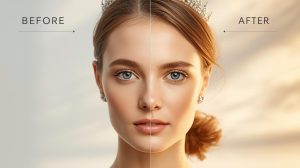
There’s always been a problem with online shopping. You add something to cart. It arrives. It doesn’t look like you thought it would. You return it. The store eats the shipping cost. You’re annoyed. Everyone loses.
The Virtual vs the Real
Virtual try-ons have been around in some form for years. You know those cheesy augmented reality apps that would put a pair of sunglasses on your face and the sunglasses would be three inches from your nose? Yeah. Not helpful. But the new generation of facial swap-based try-on apps are something else altogether.
The new apps don’t simply “paste” an image. They account for the actual shape of your face – the distance between your eyes, the shape of your jaw, the slope of your cheekbones – and simulate how the thing would actually sit on your face. It’s not so much “cut and paste”, as “architectural render”. The resulting quality is night and day.
Cosmetic companies were among the first to embrace this. Instead of trying to get the right shade of foundation on a white hand that bears little resemblance to your skin, you can see your entire face change. Shadow palettes, lipsticks, blush placement – you can see it all as it would look on your face for real. Conversion rates for early adopters of this technology improved. A few brands have noted return rates decreased by double figures. That’s not a small win.
The Reason Face Swap Tech is Better for Buying Than You Think
It might seem strange, but consumers actually prefer face swap try-ons to product photos. It sounds odd. But think about it.

A product photo is art-directed. The lighting is perfect. The model is professionally styled. Everything conspires to make the item look better than it will in your bathroom mirror. Seeing a product on your own face, with all the imperfections and asymmetries, is realistic. You don’t feel so disappointed when you get it.
And there’s a psychological stickiness. You think of it as yours before you even pay for it. The term for this phenomenon in behavioral economics is the “endowment effect”. Sellers call it “conversion bump”. Customers call it “I just spent $200 on blush somehow”.
Another great use case is hair color. Trying to decide between warm auburn and a cold brunette? Descriptions are useless. Swatches are tricky. But when you apply these shades to a picture of your own hair – on your own skin tone – all of a sudden it becomes really simple. This is something hair companies have fully embraced, and it’s working for them.
The Ethics Layer You Don’t Want to Skip
There’s an obvious elephant in the room. If you upload a selfie to a shopping app, that means you’re giving up your biometric information. That’s not a small thing. Face geometry can be more distinctive than a fingerprint in some cases, and once your face is in the database, you don’t have much say in how it’s used.
The good companies are doing this by analysing your face on-device – no data leaves your phone. Others are being less transparent. Consumers who have begun paying attention to privacy policies are finding this out, and it matters. Potential customers won’t use a try-on service unless they know where their data is going. That’s a rational position.
Laws are emerging in a number of jurisdictions. The European data protection regime already poses problems for those who collect biometric data in a cavalier way. And some US states are contemplating or have introduced biometric privacy legislation. Companies that don’t consider this as they develop their virtual try-on features are going to run into problems.
The other ethics question is about representation. Virtual try-ons originally had trouble with darker skin tones. They were trained with the same AI models that weren’t as accurate at detecting faces of different demographics. We’ve come a long way, but it’s patchy. A product that works for some shoppers and not others is not an equitable product.
What the Future Looks Like in Three Years
The future is obvious. Technology is improving – the cameras on our phones in 2022 were miraculous, but now we have sensors that capture more depth and colour information. AI models are being trained with more data. The cost of real-time processing to do complex face mapping is coming down.
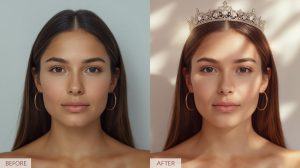
Social try-on is one area that’s attracting significant attention. Rather than buying a look in secret, you broadcast a face swap try-on to your friends and colleagues for feedback before purchasing. It seems frivolous but the early trial data on user engagement suggests it’s being used, and the social proof aspect leads to more sales than just browsing on your own.
Video shopping – live shows of products where you can click to try on – is another area where face swap technology fits like a glove. The lag problems that made this impossible two years ago have been resolved.
Then there’s a less sexy but potentially important use case: returns. When returns are necessary, some sites are experimenting with using the original try-on experience to determine why the product didn’t live up to expectations. Was it the color rendering? The scale? This process, if done right, helps the tool get better and avoid making the same mistake more than once.
Those who learn how to make the experience seamless – quick, accurate, reliable (no spying or creepiness), and even fun – will have an edge. Those that make it a “me too” feature will find people taking notice and abandoning ship.
Shopping online isn’t frictionless. And the fitting room issue, the reason we’ve returned billions of dollars of products, is starting to succumb to good face swap and virtual try-on. And that’s a big deal.