You posted one selfie, pressed the button, and received in response something that vaguely resembled you — but also looked like a wax figure of your cousin. All of us have been there. Face swaps do not fail because the software is faulty. They fail because the system does not have enough data to work with. It is the part that no one really explains. So let’s fix that. Discover the fun and creativity you can unlock when you swap faces with just a few clicks.
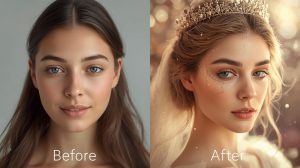
Training Data Not an Addition, But the Start
Training data is not a bonus feature — it is the foundation.
Consider a face-swapping model as a detective reading thousands of case files. The fewer examples it has seen, the worse it becomes at making conclusions from incomplete evidence. Give it a single blurred photograph, and it is guessing. Give it fifty clear, varied shots, and it begins to truly understand your face.
The same applies to training data in AI face swap systems. The model requires enough visual input to construct an internal representation of your facial structure. Where is your nose in relation to your cheekbones? How do the corners of your mouth move when you smile or react? How does light affect your face in different environments? One photo answers almost none of these questions.
Adding more photos does not just increase volume. It adds dimension.
What Would Happen When You Just Feed the Model a Little
With limited input, the model fills gaps with guesses.
Here is a simple thought experiment. Imagine you saw someone only once, in dim light, across a room. You might remember general traits — hair color, rough height, maybe something distinctive. But you would miss what makes their face uniquely theirs.
This is exactly what happens when AI face swap systems receive minimal input. The model relies on statistical averages to fill in missing details. It does not know what your ears truly look like, so it guesses. It does not understand how your jaw shifts when you tilt your head, so it approximates. The result looks human, but it does not quite look like you.
More data bridges those gaps — and how well it does so is critical.
Diversity Wins Over Quantity (But Both Help)
Fifty photos with different angles, lighting conditions, expressions, and distances will outperform two hundred nearly identical front-facing photos almost every time. The model is not just collecting images — it is building a 3D understanding of your face from 2D inputs. That requires variety, not repetition.

Resolution Is Important, But Not as You Think
Clarity matters more than pure resolution.
Yes, a sharp image gives the model more pixel-level detail. However, high resolution alone does not guarantee better results. A high-resolution image where the face is partially hidden — by sunglasses, shadows, or angles — provides less usable information than a moderately lit, fully visible face.
The model needs clear facial data: visible eyes, an unobstructed face, and a defined jawline. When these are hidden by accessories, hands, extreme angles, or blur, the model is forced to guess — and guesses reduce accuracy.
The Benefits of Adding More Data to Real-Time Performance
This is even more critical in video face swaps. With more training data, the model builds a stable internal reference. It becomes capable of predicting how a face should appear in new, unseen conditions. This ability is called generalization — and it is what separates fragile results from reliable ones.
The Feedback Loop Most People Do Not Notice
Interestingly, improvements from adding data are not linear. They compound over time.
The first ten photos establish the foundation. The next hundred refine the details. Additional images cover edge cases. Eventually, you reach a plateau where adding more photos yields diminishing returns. However, reaching that plateau is essential, as everything before it contributes meaningful quality improvements.
Why Expression Diversity Is Often Ignored
Most people upload their best photos — smiling, well-lit, and composed. This is understandable, but it creates a blind spot.

If a model is trained mostly on smiling images, it struggles with neutral, serious, or complex expressions. The data simply does not exist for it to learn from. As a result, it either distorts expressions or defaults back to what it knows — a smile.
Include imperfect moments: candid shots, distracted looks, subtle reactions, even awkward expressions. These expand the model’s emotional range and make outputs far more realistic, especially in video where expressions constantly change.
One Parting Word on the Real Meaning of Better Results
Better results do not come from better software alone. The algorithm does the processing, but the input defines the ceiling. Give it strong data, and it produces something convincing. Give it weak data, and even the best model will create something that feels slightly off.
More photos. More variety. Better quality. These are not marketing claims — they are the difference between a face swap that feels real and one that immediately gives itself away. The model only performs as well as the data allows it to.