The manner in which technology is influencing creativity in contemporary times is beyond impressive. The ai landscape generator is one of the most amazing inventions that transforms plain landscapes into amazing and fantasy-like pieces of art. Yet what is the mechanism, and why does it so intrigue the people?

The Magic Behind Generators of AI Landscapes
The core of this technology is that artificial intelligence can comprehend patterns, colors, and textures that can be observed in nature. To learn the appearance and feel of nature, the AI landscape generators rely on huge collections of images, including majestic mountains and calm rivers. After being trained, such systems are able to produce completely new landscapes that combine both reality and creative interpretations.
Imagine that he is a painter who has an infinite palette of brushes and colors, but he has never actually looked at a landscape. Rather, the artist is taught to paint based on the images he or she observes, and as time goes by, the lines on the brush begin to look like a whole new thing. It is not only about duplicating nature in the case of an AI landscape generator, though it is also about recreating it, pushing the limits of creativity in a way that would have seemed unachievable ten years ago.
Creating Real but Surreal Landscapes
The surrealism is what makes an AI-generated landscape stand out among the ones that can be found in a classic picture or painting. Imagine a scenario where the sky is shimmering in purple and pink hues or a scenario where tall waterfalls are dropping on a cliffside that appears to be defying the law of gravity. These works provide a feeling of amazement, an escape of minutes that can be said to be connected to nature, but it is unquestionably something beyond.
Traditional artists base their work on their experiences and feelings, whereas an AI landscape generator is not restricted to memory or earthly conditions. It borrows thousands of pictures and then combines those elements in a manner that none of the human artists could ever come up with. The outcome is a completely new topography that may be realistic with some tinges of fantasticality that make the scenes look fresh and inspiring.
Fusion of Realism and Fantasy
A somewhat more thrilling feature of the AI landscape generator tools is that they combine the realistic with the unrealistic. Imagine a desert with rocks that smoothly shifts to a forest with green trees—a visual contrast that works against the nature expectations. These unlikely combinations start the imagination and provide us with an idea of the landscapes that could never have possibly existed in our world.
In a lot of respects, such generators enable us to experiment with a form of what-if in the design of landscapes. Suppose that there were forests in the desert? Suppose the mountains might sprout in the midst of the ocean? Through AI, such questions are pictorial possibilities, and the findings are fatalistically beautiful and demeaning.
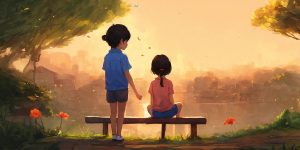
The Artificial Intelligence of Artistic Design
AI art is generated with the help of machine learning. It is not a matter of providing the AI with a basic manual of rules to follow: act like this, and after that, act like that. Rather, the machine is trained by means of thousands, or even millions, of instances. Eventually it starts to realize what is effective and what is not. Once given a stimulus, in the form of a text description, a given image, or even an abstract concept, the AI makes use of all accessible learned information and creates something new.
To illustrate, when you instruct an AI landscape generator to draw a picture of a snow-capped mountain in the background and a peaceful lake in the foreground, it will draw a completely different image. However, here comes the trick: it will not be a mere copy of a familiar photograph; it will be a vision founded on the shades, colors, textures, and other things it has learned through its long-term experience. Every picture is distinct, one of the variations of the acquired models, and it surprises us with its profundity and fantasy.
Data to Art: The Intersection of Technology and Emotion
The algorithm and code behind it notwithstanding, the emotional appeal of AI-generated landscapes cannot be underestimated. The sheer beauty of the scenes these tools make us tap into something primitive in us: the need to relate to something natural, to feel the grandeur of the world without even getting out of the comfort of our screens. It is well-known how relaxing a beautiful landscape may be, and an artificial landscape generator intensifies the feeling, providing us with the landscapes that suit our personal needs and wants.
It may look clinical and cold, but the result is otherwise. The AI does not just create sterile images but creates landscapes that one would feel some sense of wonder, awe, and peace from—emotions that human artists seek to create, but AI does it differently. It almost seems that the machine, even though not having any feelings, is aware of what will produce a strong feeling in the viewer.
An Art Form Like No Other
The fact that an AI landscape generator has an unlimited potential is what makes it distinct compared to traditional art. It has no limits, no limitations as to what a landscape may be. The fusion of information, algorithms, and machine learning forms a dynamic, fluid process whereby landscapes are generated through this infinite landscape of possibilities of imagination. This freedom enables the establishment of the new environment that is recognizable but completely unfamiliar, providing new insights into the nature that we believe and consider so well.
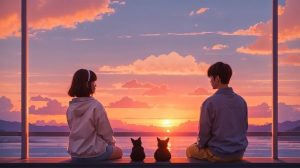
Ultimately, AI-generated landscapes have the strength of offering new creative and emotional worlds and reflecting the promise and beauty of technology and art. It could be the peace of a sunset or the insane splendor of a thunderstorm; an AI landscape generator lets us find a place in nature, limited only by the imagination.
The next time you are lost in the splendor of the breathtaking view, keep in mind that technology may be the brush behind the masterpiece.