There is something new that reinvigorates the way makers approach their work about every few years. It was done by desktop publishing. Smartphones did it. And now, it is being repeated with AI swap face technology – silently, quickly, and with consequences which most people are yet to completely take in.

This isn’t hype. Take out your phone now and scroll through any short-video apps. You will find it all around. A person with a face of a historical figure. An artist transforming into his or her favorite character. The spokesperson of a brand is morphing flawlessly between the appearances. The effects that would have cost a Hollywood effects budget, are now being achieved in less than 60 seconds on consumer hardware.
The difference in time between the past and the present
Five years back face-swapping was primarily a party trick. The outcomes were shaky, unnatural and immediately obvious that they were not real. The initial deepfake scandals left the technology with a bad reputation. Advertisers steered clear. Platforms panicked. Lawmakers began to sharpen their pencils.
Then the models got better. Much better.
The transformation occurred at a rapid rate. Older GAN methods were substituted by diffusion-based ones. Processing was taken to the edge – that is, your device, not a remote server farm. The latency time reduced to milliseconds. In an instant the face replacement in real-time was not only technically, but also practically feasible. The output of a solo artist using a mid-range laptop would have taken a green screen studio and a VFX team in 2019.
The social media content revolution resides in that chasm, between then and now.
The reason why Creators Use this
Ask a content creator why he/she began using ai swap face tools and you will hear a dozen answers to this question. Nevertheless, there are several themes that are recurring.
One of them is privacy protection. There are lots of individuals who desire to have an audience without revealing their faces to the internet indefinitely. Face swap also allows them to have a consistent visual identity – same character in each video – without ever having to be seen. There are some of the most-followed accounts on some platforms which work this way.
Another is the consistency of character. st storytellers wishing to immerse themselves in historical times, fantasy worlds or to portray branded characters can now do so throughout an entire content series without the disruptive incompatibility of amateur productions.
Then there is good old experimentation. Innovators are inquisitive individuals. Once they will do anything. The creative output goes off the scale when you reduce the technical barrier to zero. Ideas that would never have passed the too hard to pull off filter, are made.
The Brand Angle There is nothing to talk about anymore
It is at this point that it becomes commercially interesting. This technology has been secretly tested by the brands to be used as a localization tool. Same ad campaign, same script, same emotional arc, but appearance of the spokesperson changed to suit various regional markets. It has nothing to do with deceit. It has to do with cultural resonance. What is familiar and trustworthy in one market, may be foreign in another.
This isn’t hypothetical. It is already occurring in Southeast Asia, Latin America and even some parts of Europe where international brands desire to be hyper-local and authentic without flying talents to a dozen countries. The economics are strong. The artistic movement is incredible.
The production pipeline is virtually unrecognisable. A shoot, which used to involve travel, numerous talent bookings and weeks of post-production, can now be squeezed dramatically. That alters the calculus of campaigns being financially viable.
The Moral Tangle that No One Can Unravel
This is the truth bit: this technology has a dark side and it would be intellectually disingenuous to deny this fact.

Non-consensual use. Political manipulation. Fraudulent impersonation. These aren’t theoretical risks. They have already come into reality with documented cases all over the world. The same feature that allows a comedian to place a silly hat on his/her face in real time can be applied to place words in the mouth of a real person.
The response has been a series of detection algorithms, watermarking conditions, and more and more aggressive moderation policies. Laws are on the move – ever so slowly, unevenly, but moving. Certain jurisdictions have made disclosure labels on any AI-altered content of real people mandatory.
None of this works out the conflict in a nice way. The policy is failing to keep pace with the rapidly decreasing cost and availability of the tools. That disjuncture is here to stay. Artists who act responsibly and openly in these tools will be better off in the long-run than those who do not. It is not moralizing, it is merely a reading of the direction in which platform and regulatory pressure is obviously moving.
Where the Real Disruption Is Coming
The obvious place of this technology is in short-form video. However, the actual upheaval could be occurring in live streaming. Two years ago, it was virtually impossible to perform real-time face replacement during a broadcast. It is now a marketable aspect of consumer software.
Consider the implications of that to streaming personalities. You are able to go live, have a full-fledged avatar or character image, and even communicate with your viewers in real-time, without ever letting them see your face. The type of entertainment that this facilitates is truly novel. It is more like the performance of animated characters than the conventional vlogging. A number of streamers already have already amassed significant audiences on precisely this model and the numbers indicate that audiences do not merely accept it, they are in fact enthusiastic about the immersion.
Lots of Technical Complexity Under a Simple Interface
The fact that the implementation of current ai swap faces feels like magic is that the complexity is nearly completely obscured. A slider or a single button is used by the users. What is going on below is real time face landmark detection, expression transfer, light normalization, skin texture synthesis, and edge blending – all at the same time, multiple times per second.
The accomplishments of the engineering works here are justifiably great. It took breakthroughs in model compression and hardware acceleration that three years ago were not expected to work to get all those systems to work together without visible latency or the introduction of artifacts.
Inference loads once only supported by cloud infrastructure in previous generations of this technology can now be supported by consumer-grade GPUs. democratized access. It is that change in architecture that democratized access. When the compute requirement goes under a threshold that can be achieved with regular hardware it is the user base that goes out of control. This is what has happened here.
What’s Coming Next
Multi-person swap when people are crowded. Replacement of entire bodies, not just faces. Consistent identity retention with extremely dissimilar conditions of light and camera angle. Visual replacement and voice matching. Not only as a standalone filter but also as a part of the editing software on a timeline level.
These aren’t guesses. They are features that are present in research demos and early commercial betas today. Most of them have consumer release schedules that are in months rather than years.
The content production environment in 2027 will be weird to a person who draws a parallel between it and what happened in 2022. Not dystopian, necessarily. But genuinely strange. synthetic performance. The border between filmed performance and synthetic performance is becoming blurred in a way that is quicker and more comprehensive than hardly anyone has anticipated.
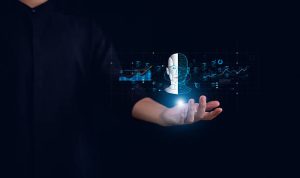
Individuals who begin to learn now, how the tools work, where they have their limits, how they can be used with some degree of craft and intent, are developing a skill-set that will only continue to gain value. skill-set that will only continue. Those who are waiting and letting things settle down before they can get to it may discover that the conventions of the genre have already been written.