Once, changing the face of one person on the body of another had to employ an army of visual effects artists, months of post-production, and a budget that would choke a horse. Studios jealously guarded their techniques. It was tedious, costly and, quite honestly, actually frightening at first sight of the initial results — uncanny valley is the least you can think of it. Then followed the machines. Discover how easy it is to transform your photos with swap face free and start creating fun edits today.
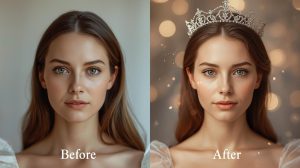
The transition of manual VFX to face swap technology using AI did not occur overnight. It quietly crept in the manner most revolutions do, until one day everyone noticed and the landscape had been transformed altogether.
The ancient method was savage
Rotoscoping in film. Old-school face replacement in film was done by hand, using masks drawn manually by artists in individual frames — literally thousands of frames per scene. Next came digital compositing, which assisted but nonetheless required extraordinary skill and time.
Consider what it required to de-age a blockbuster actor: tracking markers on skin, facial geometry maps, dozens of renders, and weeks of color matching just to have skin tones match in various lighting situations. The tolerance was thin, and if something went awry, audiences felt it at once — a jaw slightly off-axis, a too-smooth forehead, eyes that did not exactly pick up the light.
It was art, there is no doubt. However, it was costly art that could be bought only by individuals with Hollywood-sized budgets.
The Deep Learning Earthquake
In 2017, approximately, something opened up. Generative Adversarial Networks (GANs) were beginning to create images that could easily trick VFX professionals. A pair of neural networks in a feedback loop: one produces fake images, one attempts to identify them. They perfected each other obsessively, infinitely.
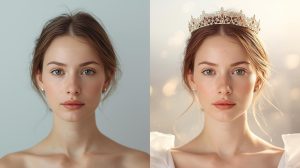
The products were of good quality — really good, and fast.
What followed was a series of tools and techniques based on this. Autoencoders were trained to extract facial features and replicate them into other video frames with increasingly convincing results. The computational cost reduced, hardware requirements became smaller, and face swapping was no longer the preserve of film studios.
Researchers released code. Communities were established around it. Individuals began to experiment — in some cases responsibly, in others not — but the genie was out of the bottle.
Democratization Problem and Consumer Tools
At this point, things get actually interesting, and a bit complex.
As a reaction to the emergence of free face swap tools in app stores and browser interfaces, people were divided. On one hand, content creators were extremely excited — filmmakers with zero budgets, actors wanting higher-quality auditions, and hobbyists simply wanting to insert themselves into film scenes.
On the other hand, justified concerns about misuse arose almost immediately. “Deepfake” became a household word for the wrong reasons. Detection tools were developed, and legislators began drafting regulations.
And this is the point — blaming the technology for misuse is like blaming a kitchen knife for a crime. It is not the tool itself, but the ecosystem, guardrails, education, and platform policies where the real responsibility lies.
Good actors (pun intended) continued building, and the tools kept improving.
What Modern AI Face Swap Really Is
The current face swap applications run on architectures that seemed like science fiction ten years ago: diffusion models, transformer-based attention mechanisms, and 3D face modeling that accounts for lighting direction, subsurface skin scattering, and facial muscle movement simultaneously.
The best platforms now handle lighting consistency — matching color temperature and direction — as well as occlusion control, such as managing hair, glasses, or hands passing in front of the face.
They can transfer expressions, not just paste faces, but adapt them to match the target subject’s mood.
Temporal coherence ensures results remain stable across video frames without flicker or drift. This used to be a major challenge — while still images were easier to fake, video often revealed inconsistencies. Modern systems use motion priors and frame awareness to solve this.
Good Work Practices in Real-life
Without hype or sensationalism, the applications are very practical.
These tools are used in film and television production to reduce reshoots. If an actor is unavailable for ADR sessions, minor post-production fixes can now take hours instead of weeks. Independent directors can compete at much higher levels.
The gaming industry uses face swap technology to create characters and generate cutscenes. AI-assisted face work reduces production timelines significantly while enabling more photorealistic characters.
Marketing and advertising teams use it for localization — adapting spokespersons for different markets without recreating entire campaigns. It is largely mathematical and more efficient than traditional methods.
Where the Technology Is Going
Better quality is the next frontier but control is the better.
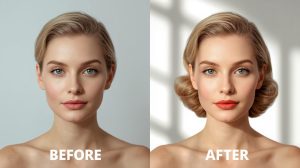
Creators want granular control: change only the mouth, preserve the eyes, adjust bone structure but keep skin texture. The blunt tools of early face swap are being replaced with surgical precision.
Multi-person scenes are also a focus. Handling multiple faces with varying lighting conditions in a single frame is far more complex than single-subject scenarios, and research is actively addressing this challenge.
What has not changed is the fundamental human fascination with faces. From birth, we are wired to pay attention to them — they are among the most informative visual cues we encounter. That is why face swap technology, despite its complexity, spreads naturally without needing heavy marketing.
The technology that began on studio backlots with armies of artists has now found its way into everyone’s pocket. It is a journey worth following.