The Rise of Digital Identity – the ‘It’ Factor for Games
Ever made a character in a video game? You probably agonised over nose shapes and eyebrow thickness, and then just slapped on a random haircut. We all did it. But remember the days of the sliders and presets? It’s on its way out – and the face swap ai is killing it.

It’s not just a fancy new toy. It’s a totally new way for people to experience virtual worlds. Seeing your own face on a game character – after scanning in your face – is a different experience to choosing from a menu of hair and skin tones. It’s personal. Almost uncomfortably so.
Why Gamers Want to Look like Themselves
There’s a psychology going on when you look into a computer screen and see your own face looking back at you. Academics call it “character identification”. Players call it “now I feel like I’m really playing the game”.
Sports games got this one first. Scan, import, play. But the tech was unwieldy for so long. Lighting mattered too much. Angles mattered too much. It looked like a wax museum statue of you, which is not much better than an anonymous character.
Face swap AI changed the math here. Rather than needing a photogrammetry studio, we can now extract and model the facial geometry from a couple of photos. Sometimes just one. The quality of the result has improved by so much in the last three years that some devs have abandoned their old photogrammetry rigs altogether.
NPCs Are Getting Weird (In The Best Way)
Where this gets interesting is with NPCs. Player avatars are one thing. But the NPC problem has plagued game developers for years.

You know the feeling. You’re strolling through the middle of a supposedly bustling city in an RPG and you keep running into the same three faces for every merchant, every soldier, every civilian. It’s like watching a movie with a big red blinking sign saying “loading”.
Face swap AI offers an alternative. Rather than spend money on hundreds of different character models – insanely costly – you can build huge banks of procedurally-generated NPC faces. Tweak an expression. Age up a baseline model. Swap ethnic features across a template. What used to take a lead character artist two weeks to do can be done in a few hours.
And some indie developers are doing even more hacky. They’re taking a face swap tool and combining and blending NPCs from different sources until something unique and recognisable as human results. It’s like cooking with leftovers – you know what you’re using but it’s something new.
The Multiplayer Angle We’re Not Hearing Enough About
Immersion in single-player games is sexy. But multiplayer use cases of face swap technology could be the real story.
Picture this: you load into a battle royale. Your character looks like you. Their opponent’s character looks exactly like them. There’s now a social element to the game. You’re not fighting an avatar. You’re fighting a face.
That’s either really cool or really scary, depending on the person, though.
Beyond gameplay, the face swap ai pipeline is impactful for social gaming. In-game concerts, meet ups, persistent multiplayer spaces – when you have your own face on your avatar you act differently. You’re more accountable. More present. It’s fascinating and a bit creepy too.
The face swap ai pipeline also allows for real-time facial expression mirroring. An increasing number of platforms are experimenting with capture of your facial expressions to drive your in-game avatar’s expressions while using voice chat. You laugh, your character laughs. You raise an eyebrow skeptically, so does your avatar. It’s not yet flawless (there’s still a little bit of nightmare fuel there), but the writing is on the wall.
The Challenges Game Developers Face
Let’s talk about the points of contention, because there are some.
First: consent and data. If a game wants to scan your face, it’s gathering biometric information. It’s a complex set of issues that vary by country. This has backfired for some game studios if they haven’t accounted for this early enough in the process.
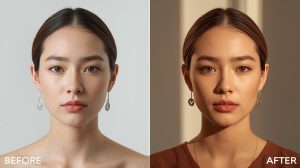
Second: the uncanny valley doesn’t disappear just because the technology is better. It just moves. Do a face swap just a little bit wrong and you’ve got a nightmare scenario that gamers will capture and send to reddit. The margin for error is thin.
Third: performance overhead. Face swapping in real time in a multiplayer game takes some processing power. It’s not for every platform, and that’s going to lead to some ugly trade-offs between visual quality and hardware affordability.
The Horizon Looks Genuinely Wild
It’s difficult to say where this technology will be in five years (bad pun intended).
There are already experiments where the NPCs not only look like different characters, they know who you are. They react to you specifically. An NPC might tell you that you look like you’re having a bad day. Or notice that you’re the same guy who destroyed their village three save games back. It’s getting harder to tell what’s “real” and what’s game character each month.
Other game developers are playing with procedurally generated NPCs that visibly age as the game’s narrative progresses. Your character’s trainer is young at the beginning of the game. Thirty “real” years later, the same face – created procedurally using face-swapping techniques – is wrinkled and white-haired and aged. It’s a storytelling technique, too.
Face swap AI is the latest, but it might just be the one that turns players from passive observers to active participants in the story.
And honestly? Which is a cause for excitement.