A new story is released every couple of months. There is a video, compelling, smooth, almost as real as anything. Except it isn’t. Somebody generated an image or video through an AI image generator or video synthesis engine and inserted some words into the mouth of someone they did not know, a face onto the body of another person or an event that did not occur in the world. And when the truth does come round, it is too late.

That is where we are not comfortable, that is where we live at the moment.
How Did we get here so fast?
The technology didn’t sneak up on us. Scientists publicly published face-swapping models. They were refined publicly by open-source communities. The tools that used to take a lab full of hardware to operate can now be operated on a mid-range laptop. Others are run in a browser tab.
The term swap face ai free is searched thousands of times every month. And that is what is so good about it – it is free, it is fast and there is hardly any obstacle to using it irresponsibly.
A convincing deepfake required days of compute time and a dataset of hundreds of images 5 years ago. Only one photograph is enough today. The distance between technically possible and anyone can do this has been reduced to virtually no distance.
The repercussions of that collapse.
When the Face Isn’t Yours Anymore
The following is a situation worth pondering. Suppose you wake up and see a video of yourself, your face, your voice, synthesized in a convincing way, saying something that you did not say. Maybe it’s embarrassing. Maybe it’s criminal. Perhaps it ruins a relationship or even a career.
You didn’t consent to it. You had no warning. And whoever created it worked with a free tool which they downloaded within ten minutes.
This isn’t hypothetical. It has happened to journalists, politicians, celebrities and common people. Women are the most targeted – non-consensual synthetic intimate imagery has become an epidemic of online abuse. Most countries are yet to be caught up by the technology in the law.
The moral transgression in this case is not minor. It’s a direct attack on identity. Your face is not a raw material of content of another. However, in modern technology it is treated as such unless there are explicit safeguards against this – and in many cases there are none.
The Political Aspect Is Truly Concerned
Always there has been the problem of misinformation. Propaganda is ancient. The deepfakes introduce a new dimension that is more difficult to combat: both sides plausible deniability.
An altered video can cause one to seem to confess, intimidate, or provoke. The initial impression remains when that video goes viral before anyone has refuted it. This is what psychologists refer to as the illusory truth effect – being exposed to something many times, even after being corrected, causes a trace of belief.
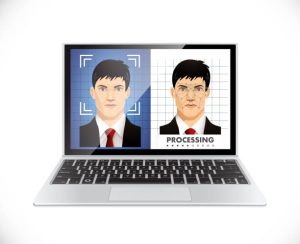
This is especially susceptible to elections. The release of a well-timed deepfake 48 hours before a vote – just enough time that fact-checkers have no time to react to the information properly – may change public opinion in a manner that cannot be entirely undone.
Synthetic media is already being considered by some governments as a national security concern. That’s not paranoia. That is a logical reaction to the current state of technology.
The Trust Issue Is Larger Than any individual Deepfake
This is the malicious aspect that is not discussed enough: even in case all deepfakes were instantly recognized and disproved, the damage would only continue to grow over time.
Since now that people are aware that realistic fake videos can be made and easily so, they begin to question it all. Actual recordings are rejected as fake. Real-life recordings are marked as AI-generated. The whole epistemic basis of video evidence begins to fall.
It is also known by other names such as the dividend of the liar – the payoff that bad actors receive not because their fakes are believed, but because of the overall climate of mistrust that deepfakes generate. The fact that that is a deepfake is a valid defense makes it more difficult to hold anyone responsible of anything.
Journalism suffers. Courts struggle. Discourse on the part of the populace becomes more cloudy.
The Consent Question No One Wants to Answer
The underlying question in all of this is some kind of fundamental ethical issue that the technology industry is yet to completely respond to: who has the right to use the likeness of someone?
Existing practices are haphazard at best. When you post photos on numerous sites, somewhere in the terms of service, there is a language whereby your image information is given a wide scope of licensing. Certain AI training images have also contained scraped images of people publicly without their direct permission.
Those who create these tools tend to claim that there is no expectation of privacy in faces in open spaces. There is the legal point of view there. Legally permissible and ethically sound are not necessarily synonymous and confusing the two is a fallacy at a real price.
What Accountability Really Means
Law making is beginning to take place in some countries. In most jurisdictions, synthetic media disclosure laws are being developed and enacted and require that AI-generated content be marked as such. Platforms are building detection tools, but it’s highly cat-and-mouse, as detection abilities are usually far behind generation abilities.
Virtue efforts in the industry are also voluntary. Coalition of technology companies are developing watermarking standards, provenance tracking systems, and content authenticity initiatives. It remains unclear whether the adoption will ever be widespread enough to be of significance.

The detection will not be the solution, though. Most individuals will have seen a deepfake by the time it gets to them, and thousands or millions will have viewed it. The speed at which synthetic media propagate is many times faster than the correction mechanism that we possess at the moment.