Photos will scarcely become what they are meant to be. One is shown in the photograph at an untimely trend. Attention is stolen by some random object. The haunting with every look at the picture is one of the background details. That is why people are inclined to resort to quick solutions, especially those that allow them to remove person from photo free online without turning the process into a technical puzzle. It is not glamour or innovation that attracts. It’s relief. You spot the problem, remove it, and the picture finally relaxes.
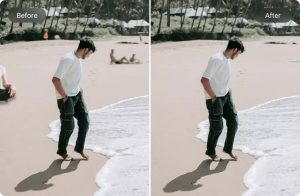
It is not taste that has changed over the years. People always wanted purer images. What changed is access. Simple repairs are now possible with a few clicks and a sense of when to stop.
These Are the Reasons Why Simple Fixes Are More Than Fancy Effects
Most photographs do not need dramatic editing. They need small corrections. A cluttered background trimmed. A stranger quietly removed. A distraction swept away so the subject can breathe.
Single fixes do not overpower the moment. They respect it. They step aside. This is why AI Magic Eraser appeals to both casual users and professionals.
Editing Used to Be Like Homework
Traditional editing programs were heavy. Menus. Sliders. Layers. Every step invited a mistake.
Friction discouraged action. Many people lived with flawed photos because fixing them felt harder than ignoring them. AI erasing changed that. Editing became maintenance, not a project.
Thinking in Plain Terms with AI Magic Eraser
The tool analyzes what surrounds the area you want removed. Color, texture, light, and pattern are studied. The missing space is rebuilt using nearby visual cues.
You don’t guide every step. You guide intention. The system completes the rest. That division of labor makes editing feel natural.
The Reason Why Removing People Is the Ultimate Fix
People instantly draw attention. No background object disrupts a photo as strongly as a human figure.
Their removal restores focus. The image aligns with how the moment felt — personal, calm, undistracted. It’s emotional correction rather than technical polish.
Background Strangers vs. Meaningful Subjects
Most users don’t want to erase friends or family. They want to remove strangers who wandered into the frame.
AI Magic Eraser excels here. It handles non-interactive figures while preserving the story. The scene remains intact while the noise fades.
Simple Doesn’t Mean Sloppy
A common fear is that ease leads to careless editing. In practice, simplicity encourages restraint.
When tools are light, users trust their eye. Over-editing is less tempting because clarity—not spectacle—is the goal.
Editing Without Fear Changes Behavior
Undo options and fast retries change how people experiment. You test ideas. You explore variations. Feedback replaces manuals.

Confidence grows quickly in this low-risk environment. Editing becomes exploratory rather than hesitant.
Common Illusions That Break Believability
Over-smoothing is the most frequent giveaway. Flat areas that should have texture stand out immediately.
Repeated patterns also reveal edits. Cloned areas catch the eye fast. Incorrect shadow direction breaks immersion. The fix is restraint. Remove the distraction, view at normal size, and stop when it feels natural.
The Importance of Normal Viewing Distance
Most photos are viewed on screens, not under microscopes. Judge them the way others will.
If the edit disappears at arm’s length, it succeeded. Pixel-level perfection rarely improves perception.
Plain Backgrounds Are More Forgiving
Open skies, walls, water, and fields give AI room to reconstruct convincingly.
Busy scenes require patience, but even then a second attempt can improve results. Knowing this sets realistic expectations.
Everyday Repairs That Matter
Travel photos become personal again. Product images gain clarity. Real estate photos lose clutter. Old family photos regain life as damage and distractions fade.
These edits are quiet. They support the image instead of announcing themselves. That subtlety is the point.
Speed Keeps the Moment Fresh
Fast tools preserve emotion. You fix the image while the feeling is still alive.
Delayed editing distances you from the moment. Speed protects the connection between memory and image.
Why Free Access Lowers the Barrier
Free tools remove hesitation. There’s no calculation. No commitment.
People fix photos they would have otherwise ignored. This raises overall visual quality without added effort.
Trusting Intuition Over Instructions
AI handles execution. Judgment remains human.
When the image feels balanced, it’s done. No checklist required.
Clean Doesn’t Mean Empty
A clean image still has character. It simply loses distractions.

Think of tidying a room. You don’t remove furniture. You clear the floor so movement feels easier.
Why Simple Fixes Age Better
Heavy edits age quickly. Trends fade. Effects lose relevance.
Subtle cleanup endures. The photo remains honest years later. Flash fades, but believability lasts.
When Tools Get Out of the Way
The best tools disappear. They don’t demand attention. They support intent.
That’s what AI Magic Eraser does. It keeps repairs minimal. The moment stays. The distractions leave. And the photo finally looks the way it should have from the start — clean, natural, and unforced.