The Effects of Image Complexity and Edge Detection on Cartoon Results
The feature that people notice initially when they use an image to cartoon converter online is the highly unpredictable nature of the results produced. One of the photographs resembles a clear comic strip. One of them becomes a cacophonic mess that seems like a bad photocopy of the 90s. Same tool. Same settings. Different outcomes. The tradeoff tends to reduce to one thing that is overlooked by most users upon its initial display: image complexity.
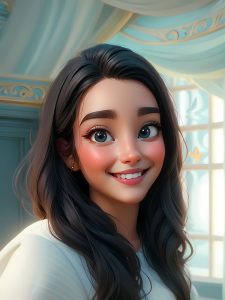
Image complexity does not depend just on the file size and resolution. It is about visual chaos. The number of textures competing for attention. How many sides of the world would fain appear? The extent to which the algorithm would need to chew on before it could make creative choices. A plain portrait on a muted background will act quite differently compared to the busy street shot full of signs, faces, wires, shadows, and motion blur.
Cartoon conversion lives on the clarity. The more graphic junk you feed into the machine, the more work it must do to determine what is important. Nor are algorithms philosophers. They guess. Fast.
An unspoiled image is similar to a tidy table. The tool knows where to look. A disorganized picture is taking a trashy drawer and throwing it to the floor, and telling a person to arrange it within five seconds.
What is Complex to a Converter about an Image?
Human eyes forgive clutter. Software does not. The image is made complicated by having too many competing signals.
The typical offender is busy background. Trees whose leaves were thousands of leaves. Heavy-textured brick walls. Flyaways all over the hair. Clothing with fine patterns. Pieces of jewelry, which glitter in sparkling areas. All these provide micro-details, which have to be processed by edge detection algorithms.
Lighting adds another layer. There are false edges formed by hard shadows. Lack of uniform lighting creates shadows that appear significant yet are not. The line extraction stage may be blurred due to reflections on glasses or windows. All of a sudden, there is a face with lines where lines should not be.
Then there is noise. Photos that are captured in low light usually have digital grain. Artifacts of compression creep in via messaging applications. The motion blur blurs outlines into irregular shadows. These imperfections appear as actual details to a cartoon converter, inviting to be defined.
Complex images fail not immediately. They simply generate anxious cartoon styles. Lines everywhere. Colors fighting each other. The outcome even seems more like a woodcut than a cartoon.
Why Simpler Images Often Win
The algorithm is allowed to breathe as it is just a mere image. Fewer edges. Clear subject separation. There is good contrast where it counts. The converter can concentrate on form rather than frivolity.
Imagination of a passport-like portrait. Plain background. Even lighting. Sharp focus on the face. These pictures can be easily converted into beautiful pictures. Smooth color blocks. Clean outlines. Recognizable expressions. The cartoon seems deliberate.
This is not magic. It is math behaving politely.
Simple scenes enable edge detection to isolate salient contours rather than be submerged in the small ones. The color quantization is more effective as the large areas have similar tones. The text is serene, legible, and approachable.
That is the reason why lots of cartoon applications silently suggest the use of solid backgrounds in portraits. They are not being picky. They are hedging against the panic of their algorithms.
Cartoon Rendering Role of Edge Detection.
Cartoon-style rendering relies on edge detection. In its absence, all is melted in blobs. One gets too much of it, then it becomes a spider-web.
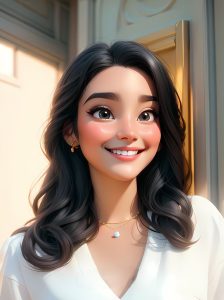
Fundamentally, edge detection finds sharp brightness or color variations. At the point of pixels jumping, a line is conceived. These lines transform into lines, outlines, and structure.
Lines are used to define form in cartoons. Faces, noses, jaws, eyes, folds of clothing. And all these are based on edge maps. An effective edge map is discriminative. It displays what is important and conceals what is not.
The issues begin as soon as the algorithm is not able to distinguish.
The edge detector flags nearly everything in complicated images. Textures become lines. Shadows become borders. The skin pores appear as minute cracks. The system does as it was said. Detect edges. It is ignorant of which ones to disregard unless trained or directed.
That is why the edge detecting settings usually lie in the background. The sensitivity of the detector is determined by the thresholds. Minibreaks on lower thresholds. Greater thresholds are emphasized in bold ones. Everything is different with the balance.
How Prejudice Kills Cartoon Appeal.
Too many edges kill charm. Cartoons are flourishing on implication rather than accuracy. It is disconcerting to see a face depicted as a topographic map.
There is over-detection when the feed image presents too much information to the algorithm. Endless lines are instigated by high-frequency textures. The cartoon loses hierarchy. And your eyes know no place to rest.
Hair is a classic example. Hundreds of micro-edges are produced by individual strands. In place of an aesthetically superior haircut, you have a scribble. The same can be done with skin texture, particularly in high-resolution photographs that have been taken by sharp lenses.
The irony is painful. Worse cartoons can be made with better cameras without the picture being ready.
Other converters use smooth operations before edge detection. Others are dependent on machine learning models, which are conditioned to reduce meaningless edges. Nevertheless, the input image determines the tone. Garbage in, chaotic art out.
Simplification of Edges as a Secret Weapon.
The most effective cartoon renderings do not have as many lines as the source image would imply. This is deliberate. Simplification is power.
Edge simplification is noise-reducing and structure-preserving. Jawline stays. Eyebrow stays. Smile line stays. Random texture disappears.

This is commonly followed by the raw edge detection. Lines get merged. Weak edges fade away. Strong contours remain bold. The cartoon begins to breathe.
Simplification is graceful when there is low image complexity. In the case of high complexity, simplification has to be violent. Violent filtering will threaten to wipe out significant information. All at once, the faces seem flat. Clothing loses shape. The subject looks plastic.
And that is the thin stuff any cartoon converter walks on.